




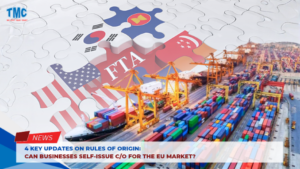
May 2026 marks a major turning point in Vietnam’s import-export procedures, with several anticipated changes to the rules of origin under the Vietnam – EU Free Trade Agreement (EVFTA) and the ASEAN – Korea Trade in Goods Agreement (AKTIG). These changes are set out in Circular No. 14/2026/TT-BCT and Circular No. 49/2025/TT-BCT.
For businesses engaged in logistics and international trade, particularly those targeting the EU, South Korea, or other FTA markets, understanding these updates is essential to optimizing tariff preferences and reducing import-export costs.
1. New Rules of Origin under the Vietnam – European Union Free Trade Agreement (EVFTA)
The latest updates to the EVFTA rules of origin focus on systematic regulatory revisions, simplified origin certification procedures, and expanded self-certification mechanisms. These changes give businesses greater flexibility in meeting origin requirements and benefiting from preferential tariffs. Businesses engaged in international trade and logistics should note four key points:
Promoting Self-Certification of Origin
From May 10, 2026, under the new regulations, goods traded between Vietnam and the EU must meet all origin certification requirements to qualify for preferential tariffs. Businesses may use a Certificate of Origin (C/O) or a self-certification of origin issued by an eligible exporter.
For logistics businesses handling shipments to the EU valued at less than EUR 6,000, the new circular also clarifies how exporters can self-certify origin without tedious procedures. Specifically, it identifies the accepted types of other commercial documents for declaring origin, including invoices, delivery notes, consignment notes, pro forma invoices, and packing lists, while excluding transport documents such as Bills of Lading. The origin declaration must follow the prescribed wording accurately. If handwritten, it must be completed in ink and in capital letters to prevent alterations.
Reducing electronic C/O issuance time to 6 hours
With the upgraded eCoSys system, electronic applications are now processed within just 6 working hours, down from 8 hours previously. First-time trader registration and online document submission also make the process more transparent and significantly reduce errors caused by manual processing.
Goods transiting through a third country must meet the “Non-Alteration” Rule
Under the new rules, when goods transit through a third country or territory, such as Singapore or Hong Kong, businesses must provide customs supervision documents, where required, to prove that the goods have remained unchanged during transit. This requirement helps reduce the risk of origin claims being rejected due to transshipment, ensuring that imported goods can qualify for preferential tariffs under the EVFTA.
The required document set may include:
– Bills of Lading or other transport documents
– Physical evidence of package labeling or numbering
– Documents related to the goods
– Certificates confirming that the goods have not undergone any alteration, or documents proving that the goods have remained under the customs control of the transit country
2. New Rules of Origin under the ASEAN–Korea Trade in Goods Agreement
Flexible Pre-Export Origin Verification
One key advantage for logistics businesses exporting to South Korea is the option to request origin verification before shipment. The circular maintains and clarifies the authority of C/O-issuing agencies and organizations in the exporting member country to verify the origin of goods before export, upon request by the manufacturer or exporter.
This mechanism allows exporters to review their production capacity and supporting documents in advance, reducing the risk of having their (C/O Form AK) applications rejected. It also helps prevent situations where goods arrive in South Korea only to be denied preferential tariff treatment by Korean authorities.
Businesses should pay close attention to these updates and stay informed, especially when handling shipments routed through intermediate ports. Compliance with rules of origin is essential for goods to qualify for preferential tariffs upon export.
If you have any questions or need support with import/export procedures, please contact TMC. Our team will get back to you promptly to assist with your logistics needs.
To explore more of the latest market trends, in-depth analyses of import-export procedures, and continuous updates from the industry, feel free to visit our Logistics News section and never miss out on any valuable insights!